






Repatriation from Germany to Russia
Repatriation System and Compatriots Resettlement Program from Germany to Russia
Returning to one’s historical homeland is not only about emotions and family values — it is also a carefully structured legal process. In 2024, Russia introduced a new legal framework: the repatriation system. This mechanism operates alongside the long-standing State Resettlement Program for Compatriots, which has existed since 2006. Both programs now run in parallel, but they target different categories of people and provide different sets of rights and obligations.
For Germans of Russian descent or Russian citizens permanently living in Germany, understanding the distinction is crucial before beginning the application process through the consulates in Berlin or Bonn.
How the “Repatriation + Resettlement” system works
Today there are two legal pathways that are often confused.
The State Resettlement Program in its classic form requires the participant to select a Russian region that officially takes part in the program, move there, and reside and work in that region for at least three years. In exchange, participants receive substantial support from local authorities: relocation compensation, “lifting” payments for resettlement, subsidies for housing and social adaptation, preferential loans, and sometimes employment support programs. Entry requirements include proof of Russian language proficiency (with several exceptions).
Repatriation, introduced in late 2023, is a lighter and more flexible status within the same program. A repatriate may choose any region of Russia — including Moscow and St. Petersburg, which were previously closed to resettlers — and is not bound to a three-year obligation in one region. However, the state support package is slimmer: no “lifting” payments or many regional subsidies. Instead, the advantages are legal and bureaucratic: simplified citizenship procedures, federal customs exemptions for bringing in personal belongings, and no need to prove Russian language proficiency.
Both tracks ultimately lead to Russian citizenship under a fast-track procedure. The trade-off is simple: resettlement provides more financial support upfront but ties you to language and regional requirements, while repatriation offers more freedom of geography and less paperwork, but with fewer financial incentives.
Who qualifies as a repatriate
Presidential Decree No. 872 defines who can claim repatriate status. The category includes:
- Russian citizens who were permanently living abroad as of February 24, 2022.
- Individuals who voluntarily renounced their Russian citizenship.
- People born or permanently residing in the RSFSR who once held USSR citizenship.
- Foreign nationals with direct ancestors who were born or lived in the RSFSR, the Russian Empire, or the USSR within the modern borders of the
- Russian Federation and who held the corresponding citizenship.
One important advantage for families in Germany: a single application can cover a wide circle of relatives — a spouse, children (including adopted and stepchildren), parents and parents-in-law, underage grandchildren, grandparents, and siblings under 18 or legally incapacitated. The whole family does not have to move at once: the main applicant may relocate first, and other family members may join within five years under the same certificate.
Germany: where to apply and how the process works
For applicants in Germany, the journey begins with the Russian consular offices: the Embassy in Berlin and the Consulate General in Bonn. Participation requires an appointment in advance via berlin.kdmid.ru. Clarifying questions can be sent to the consular section by email (full name, address, and phone number should be included).
The procedure is divided into several steps:
- Choosing your track. Decide whether you apply as a resettler (with more social benefits but a three-year regional commitment and language requirements) or as a repatriate (with freedom of choice but fewer financial benefits).
- Preparing the documents. This includes an application form, proof of identity, civil status documents, birth certificates, proof of education or qualifications, documents confirming your right to repatriation, and two photographs sized 35×45 mm. German documents, with the exception of passports and work certificates, must be apostilled, translated into Russian, and the translator’s signature must be certified by a Russian notary or consular officer.
- Submitting the application. All applications must be submitted in person. The consulate reviews the file for completeness and initiates processing. Review usually takes up to 60 days, or up to 90 if additional document verification is required. Successful applicants receive a participant certificate that lists all included family members. The certificate is valid for five years; if not used within this time, the status lapses.
- Entering Russia. Participants and their families travel to Russia, complete migration cards indicating the purpose as “private,” and present their passports, migration cards, and the certificate (or its copy). Federal customs exemptions apply: personal belongings and one car or motorcycle with a trailer can be brought in duty-free if the vehicle has been owned for at least one year and is imported within 18 months of moving.
- Registration in Russia. After arrival, participants must visit the local Ministry of Internal Affairs (MVD) office, where their certificate is marked. Migration registration must be completed within seven working days. Within 90 days, newcomers must also undergo a medical examination, fingerprinting, and photographing. In Moscow, Migron’s migration lawyers are available to guide applicants through the process with legally sound solutions.
- Applying for citizenship. Once the legal requirements are met, the repatriate submits an application for Russian citizenship at the local MVD or at a migration center in major cities. The decision is made within three months.
- Oath and passport. If approved, the applicant takes the oath of allegiance in the prescribed form. Afterward, the internal Russian passport is issued, and men of conscription age are also registered for military service.
Documents: what is required
The exact set of documents depends on the chosen track.
For the resettlement program, language proficiency is mandatory unless you are a citizen of Russia, Belarus, Kazakhstan, Moldova, Ukraine — or applying as a repatriate. Proof can come from a Soviet or Russian diploma, a document from a country where Russian is an official language, or an interview with an MVD commission.
For repatriation, language proof is not needed. Instead, applicants must provide a key “anchor document” showing eligibility: a residence permit confirming permanent residence abroad as of February 24, 2022 (for Russian citizens), a certificate of renunciation of Russian citizenship, a birth or residence record from the RSFSR showing USSR citizenship, or archival proof of direct lineage to such relatives.
In both cases, applicants must provide: the application form, passports or ID for all family members, birth and marital status certificates, (optionally) documents on education and work experience, and two compliant photographs.
Common reasons for rejection in Germany include: missing apostilles, improperly certified translations, incorrect photo format, incomplete application forms, or using service IDs instead of passports. All these issues can be prevented with careful preparation.
Key benefits of the programs
The most important advantage is fast-track citizenship, skipping the usual multi-year chain of temporary and permanent residence permits.
Participants also gain the right to work without permits or patents, and enjoy access to healthcare, education, and social services on the same basis as Russian citizens.
Federal customs benefits allow for duty-free import of personal belongings and one vehicle, provided ownership and import deadlines are respected. In some cases, expenses for visas and legal formalities can also be reimbursed.
Regional benefits vary widely. For example, in the Kaliningrad region participants receive one-time payments of about 32,000 rubles per person and up to 135,000 rubles in adaptation support. In the Far East, the “Far Eastern Hectare” program offers free land for housing or business, and preferential mortgages are available in several regions (as low as 2% in the Far East). These local incentives usually apply only to resettlers, not to repatriates, unless a regional government makes its own decision to extend support.
Special considerations for applicants from Germany
Germany is a highly bureaucratic country, and preparing the necessary paperwork can take time. Birth, marriage, and education certificates require apostilles and certified translations. Appointments at the Russian consulates in Berlin and Bonn are booked through berlin.kdmid.ru; inquiries can be sent to the consular department via email.
Family applications with adoptions, stepchildren, name changes, or mixed citizenships almost always require archival research to document lineage. Applicants should request extracts from housing records, registration cards, or military records well in advance. German family certificates generally must be apostilled by the issuing Land authorities.
Logistics also matter: personal belongings and vehicles should be imported within the duty-free window, no later than 18 months after moving. Cars must also comply with Russian environmental and technical regulations.
Choosing the right track
If your goal is to move quickly to Moscow, St. Petersburg, or another major city — or if you want to avoid regional obligations and language tests — the repatriation track is usually the better option. It provides geographical freedom and a streamlined citizenship process.
If, on the other hand, you are ready to commit to a specific region and value substantial financial support at the start, the traditional resettlement program may be more advantageous — provided you are willing to live and work in that region for at least three years and prove your Russian language skills.
In either case, for applicants from Germany, three factors will determine how smoothly the process goes: proper legalization of documents, careful attention to deadlines, and correctly including all family members in the initial application.
Conclusion
Repatriation from Germany to Russia today offers two parallel paths: the classic State Resettlement Program with its strong social support, and the newer repatriation status with freedom of region choice and lighter requirements. Both lead to the same result — a Russian passport under simplified rules and full rights in Russia. The difference lies in the route and the incentives available at the start.
The earlier families define their priorities, gather the necessary proof of heritage, and map out deadlines, the easier it will be to successfully make the move.
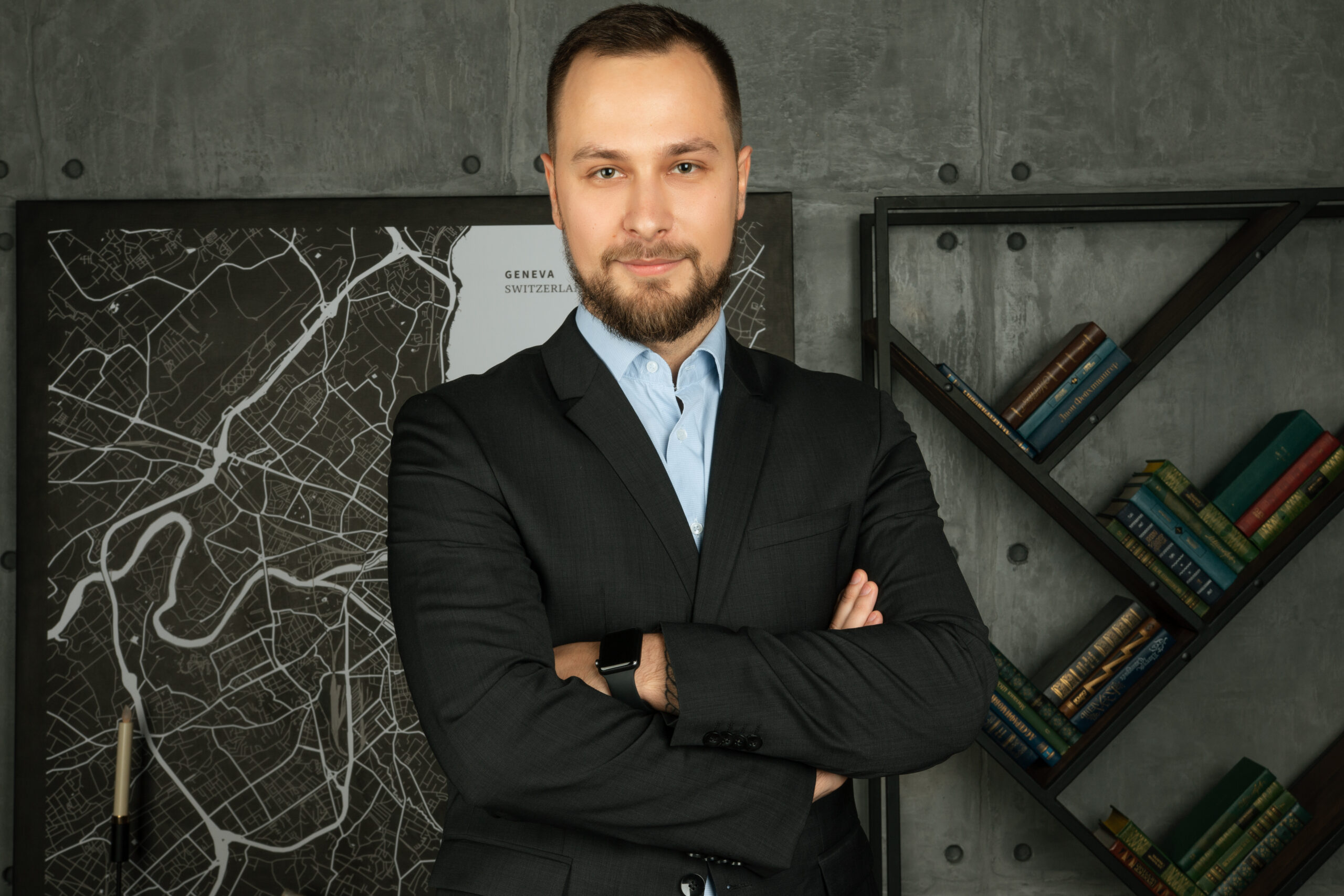
This material was prepared and reviewed by the expert

Prices
| Service |
Price |
Duration |
|---|---|---|
|
from 69,000 RUB
|
2 months
|
|
|
from 30,000 RUB
|
2 months
|
Our Guarantees

We guarantee that the documents prepared by us will be accepted for review by the Ministry of Internal Affairs (MVD). Provided that you comply with all requirements and there are no violations on your part, you will achieve the desired outcome.

Submitted documents package will be prepared without any errors and will fully comply with all requirements of the Russian Federation legislation.

Your case will never be left unresolved. If your documents are not accepted on the first attempt, our specialists will promptly address the issue and ensure your application is successfully filed with the relevant authorities.
The final cost is fixed in the contract before document preparation begins and will not change.
